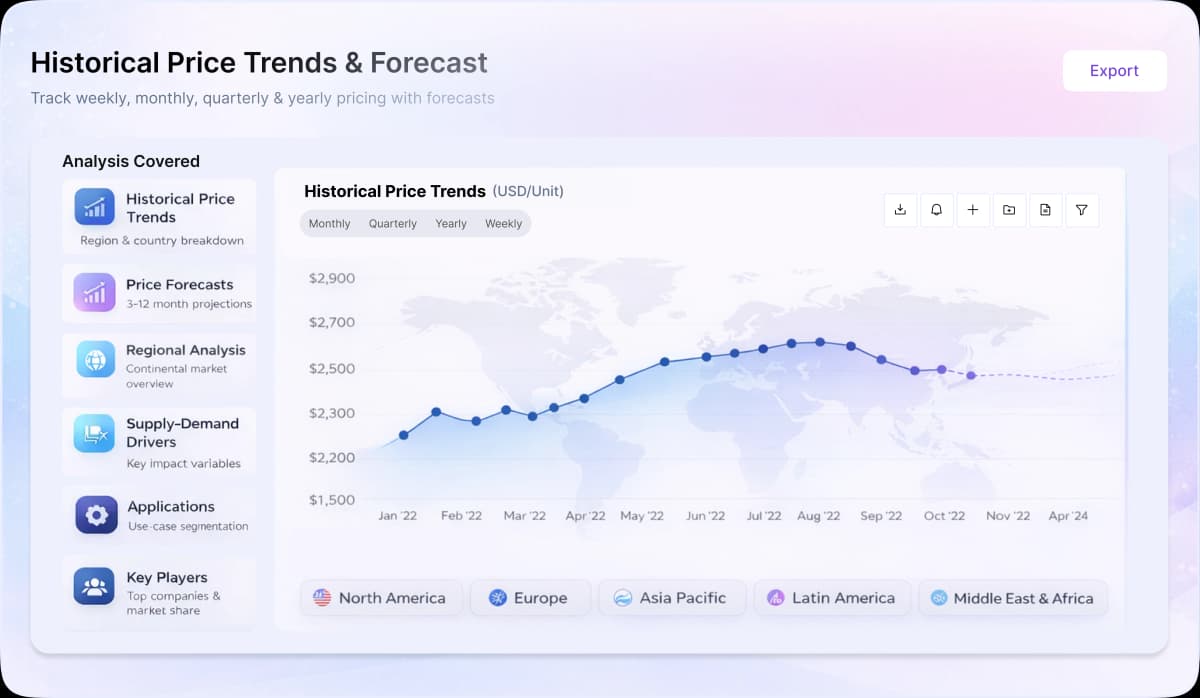
- Yellow phosphorus prices showed a steady upward trend globally in Q1’26, supported by tightening supply conditions and improving downstream demand.
- Feedstock dynamics remained supportive, with high sulfur prices improving the competitiveness of thermal phosphoric acid and indirectly lifting yellow phosphorus demand.
- Downstream demand strengthened due to fertilizers, glyphosate, and new energy materials, driving consistent procurement activity.
Asia
In Asia, yellow phosphorus prices increased during Q1’26, driven by structural supply constraints and improving demand conditions. In China, the prices were ~23.26 RMB/kg (Spot FD) in January and ~26.28 RMB/kg in March, reflecting an increase of ~14.21%. In January, prices rose due to improving downstream demand from phosphoric acid and new energy applications, while strict controls on new capacity and environmental regulations limited supply expansion. Supply remained concentrated in key regions, with restrictions on high energy-consuming production tightening availability. In March, prices rose further due to a rebound in downstream demand from glyphosate and phosphorus trichloride, combined with active demand and tighter spot availability. Producers pushed prices by holding back supply, while improved demand from both domestic and export markets strengthened market sentiment. China’s dominant role in global phosphorus production and tighter international supply further supported exports and pricing power. In India, the prices stood at ~387.11 INR/kg (CIF) in January and ~399.91 INR/kg in March, indicating a growth of ~1.10%. The slight increase was attributed to stable import dependence and demand from downstream sectors. However, increased procurement during the Rabi season also supported the prices for the commodity. Concurrently, the state of global supply chains with heightened tensions in the Middle East has also affected the overall trade dynamics internationally, causing inflation across sectors.
Europe
In Europe, the prices of yellow phosphorus were affected by the global challenges, including supply and demand from the downstream sector. As local production of yellow phosphorus is low and imports are the larger part of the supply, the prices were vulnerable to supply shortages. Stable demand from specialty chemicals and industries helped to keep the prices steady, but procurement patterns hindered more significant growth.
North America
In North America, the prices of yellow phosphorus remained steady, supported by the demand from agricultural chemicals and industry applications in the first quarter of 2026. Markets were driven by global supply shortages, coupled with cost pressure during the quarter. Although the overall price trend remained stable, the dependence on imports exposed the markets to price fluctuations.